
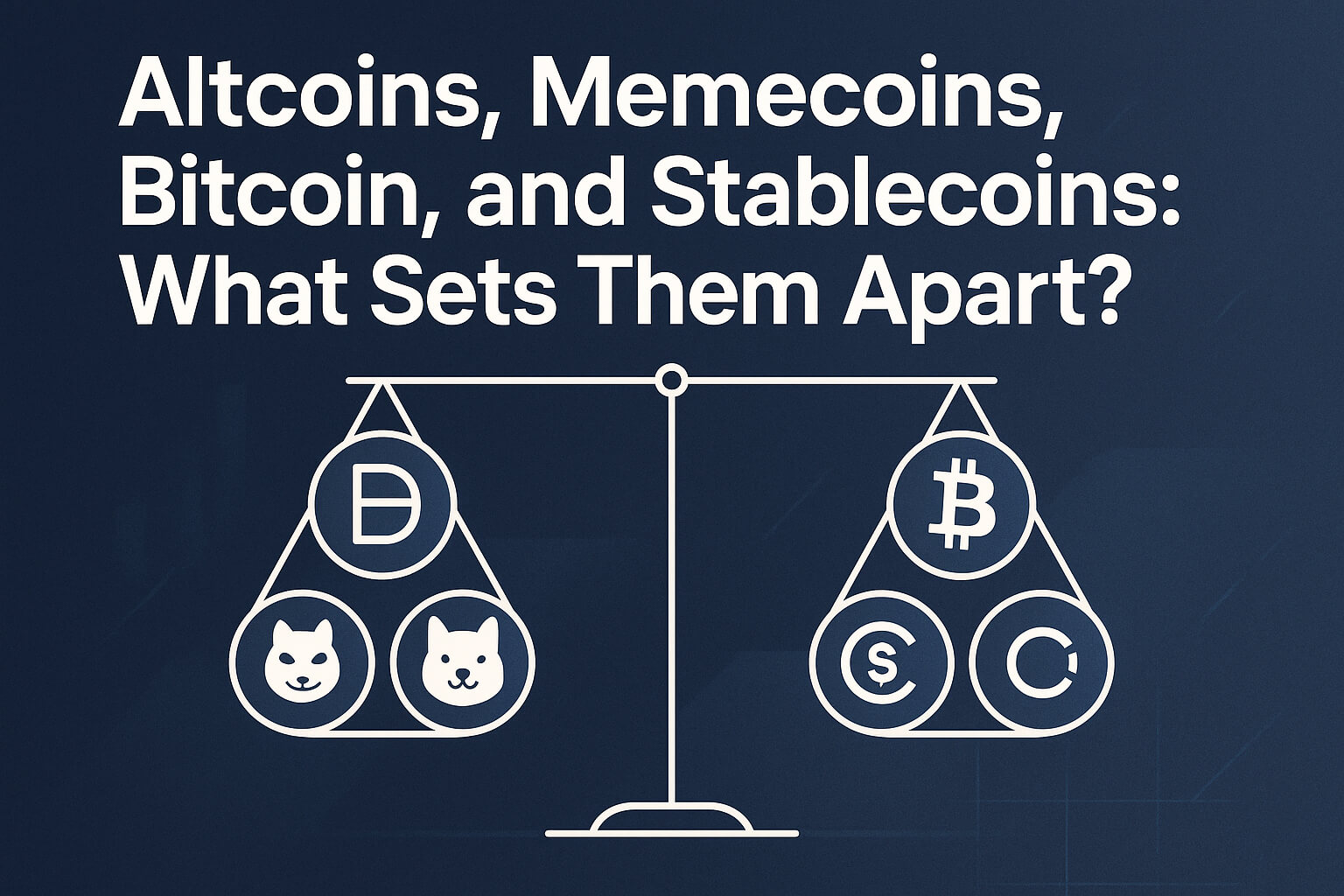
Altcoins, Memecoins, Bitcoin, and Stablecoins: What Sets Them Apart?
The moment you start poking around in crypto, you’ll notice something: it’s not just “Bitcoin or nothing.” Everyone’s got opinions about which coins matter, which are jokes, and which are “safe.” But why all the drama?
Here’s the main thing: not all cryptocurrencies are built the same. Bitcoin was the OG—created as “internet money,” with no banks or governments. It’s still the standard most investors look to when judging the rest of the market. If you’re new and want to get a feel for how crypto actually works, it’s smart to start small and buy Bitcoin online through a reputable crypto exchange or wallet. It’s the most stable entry point into the ecosystem, letting you experience wallet setups, transaction times, and market movement before exploring riskier options.
But as soon as Bitcoin took off, people began asking, “What if we change the formula?” That’s how we got altcoins like Ethereum, Solana, and Cardano, each offering new tech and ideas—from smart contracts to faster transactions.
Then, there are memecoins—think Dogecoin or Shiba Inu. They began as jokes but sometimes end up worth billions. Some see them as fun; others, pure speculation.
And let’s not forget stablecoins such as USDT or USDC. They’re tied to the US dollar, designed to stay steady while others swing wildly.
The reason for all the debate? Everyone’s trying to figure out what’s legit, what’s risky, and what might actually change the world—or at least their balance.
The Real Deal Behind Crypto: Not Just Magic Internet Money
Here’s the main thing you need to know: crypto isn’t just some made-up internet points—it’s digital money powered by a network of computers, not banks. When you hear about Bitcoin, Ethereum, or even meme coins, what’s really happening is people sending value to each other without needing a middleman. Imagine paying your friend back for pizza, but instead of using Venmo or a bank app, you’re using a system that works 24/7 and doesn’t care where you live.
Now, if you’re thinking, “How would I even get started?”—that’s where platforms like Changelly come in. When you’re ready to make your first purchase, Changelly lets you swap regular money (like dollars or euros) for crypto in a way that’s actually beginner-friendly. You don’t need to already own crypto, and you won’t get lost in complicated trading screens. It’s pretty much as straightforward as swapping one currency for another on a trip, but online and with way less jargon. This kind of simplicity is key when you’re just starting out and want to avoid getting overwhelmed.
So what’s actually going on behind the scenes? Every time you send crypto, you’re making a transaction that’s recorded on something called a blockchain—a public digital ledger. Picture a massive Google Sheet that everyone can see but no one can secretly edit. This system keeps things transparent and secure, making it almost impossible to fake or duplicate transactions.
Who’s Who in the Crypto World: Coins, Tokens, and Beyond
The crypto universe isn’t just Bitcoin and “magic internet money.” There are actually a few main types of crypto assets, each with its own job—and understanding them is your first step to not getting lost in the jargon.
First up: Coins. Think of coins like Bitcoin (BTC) or Litecoin (LTC) as the OGs of crypto. They run on their own blockchains and are mainly used as digital cash or a store of value. If Bitcoin is the “gold” of crypto, these coins are the big-name currencies you’ll hear about most.
Then you’ve got Tokens. These don’t have their own blockchains—they live on someone else’s, usually Ethereum. Imagine them as apps on your phone: they use the phone’s operating system (the blockchain) but do their own thing. Tokens can represent anything from voting power (like in a DAO), to access to a service, or even digital collectibles (NFTs).
Stablecoins are another major player. These are tokens designed to hold a steady value, usually pegged to the US dollar. Think of them as the “chill friend” in the group, helping you avoid wild price swings.
Finally, there are meme coins and experimental tokens—think Dogecoin or Shiba Inu. They’re often started as jokes or social experiments but sometimes catch on in a big way.
Knowing these types helps you spot what’s hype and what’s legit.
Breaking Down the Differences: Crypto vs. Traditional Money
Here’s the deal: crypto and traditional money (like dollars or euros) might both buy you coffee, but under the hood, they work in seriously different ways. Let’s cut through the jargon and lay out the real contrasts you’ll actually care about.
| Feature | Crypto (e.g., Bitcoin, Ethereum) | Traditional Money (e.g., USD, EUR) |
|---|---|---|
| Who controls it? | Decentralized (no single owner) | Centralized (banks, governments) |
| How is it created? | “Mined” or programmed by code | Printed/minted by central banks |
| Can you reverse payments? | Nope—transactions are final | Usually yes (banks can help) |
| How do you use it? | Apps, wallets, QR codes | Cash, cards, bank apps |
| Privacy | Pseudonymous (not fully private) | Linked to your identity |
| Fees | Can be low or high (network-based) | Often fixed, sometimes hidden |
| Availability | 24/7, global | Limited by banking hours, borders |
| Inflation risk | Depends on code rules | Subject to government policy |
| Physical form | Digital only | Both physical and digital |
See? Crypto isn’t just “online money”—it’s a whole new beast with its own rules. Some differences are game-changers; others might not matter to you (yet). Either way, knowing what sets them apart helps you make smarter moves.
What’s the Hype? Real Reasons People Dive Into Crypto
Let’s get real: most people don’t wake up one day thinking, “I need some Bitcoin in my life for the pure tech!” So, why are millions throwing their cash into crypto? First up, there’s the potential for big gains. Stories about someone buying a few dollars’ worth of Dogecoin and suddenly affording a Tesla? Yeah, those go viral for a reason. Crypto’s volatility means prices can skyrocket—or tank—fast, and some folks are here for that rollercoaster.
But it’s not just about quick money. Some genuinely believe in the tech. Blockchain promises transparency and decentralization, which sounds pretty cool if you’re tired of banks and middlemen taking a cut. Others love the idea of owning assets that aren’t controlled by any government or corporation—sort of like financial independence, but make it digital.
There’s also FOMO—fear of missing out. When your group chat blows up about the latest coin, it’s hard not to feel like you’re missing the next big thing. Plus, crypto communities are a thing; for some, it’s as much about belonging as it is about investing.
And don’t forget NFTs and gaming. Some people are here to collect digital art, flex a rare skin in a game, or just experiment with new online experiences.
The Crypto Rollercoaster: Highs, Lows, and What They Mean for You
Let’s get real—crypto is not your grandma’s savings account. The potential for profit can be wild, but so can the risks. One day you might see your investment double, and the next, it could drop faster than your phone battery at a music festival. That’s volatility, and it’s part of the game.
So, why do people still jump in? The rewards can be massive. Early adopters of Bitcoin and Ethereum made life-changing gains. Even now, new projects can explode in value overnight. But for every success story, there are plenty of cautionary tales—like people losing money because they bought at the peak or fell for a too-good-to-be-true project.
It’s not just price swings, either. Crypto is still the Wild West in a lot of ways. Scams, hacks, and lost passwords are real threats. There’s no “forgot my password” button if you lose your wallet keys. And if an exchange goes down, your coins could vanish with it.
On the flip side, being early in crypto means you get to ride the wave as the technology grows. You could help shape the future of finance, score some serious gains, and even support causes you care about. But it all comes down to being smart, doing your research, and only risking what you can afford to lose.
Is Crypto Really That Different From Stocks?
Here’s the deal: crypto and traditional investments (like stocks or mutual funds) might look similar on the surface—they both aim to grow your money—but they play by very different rules.
Stocks are like owning a tiny slice of a real company. If you buy Apple shares, you literally own a piece of Apple. Your investment grows as the company grows, and you might even get paid dividends (a share of the profits). Stocks are regulated, which means there are rules in place to protect investors. You buy and sell them through brokers, usually during set market hours.
Crypto, on the other hand, isn’t ownership in a company. When you buy Bitcoin or Ethereum, you’re owning digital assets secured by blockchain technology. There are no CEOs or quarterly reports—just code, community, and sometimes wild price swings. Crypto trades 24/7, no sleep, no holidays. It’s also less regulated, which means more freedom but more risk (think: wild west vibes).
One more thing: getting started with stocks usually means paperwork, bank accounts, and sometimes waiting days for trades to settle. With crypto, you can jump in with just a smartphone and a few taps—but you’re also responsible for keeping your assets safe. If you lose your crypto wallet password, there’s no customer service hotline to bail you out.
So, stocks = traditional, regulated, steady(ish). Crypto = digital, open, risky, but potentially rewarding. Both have their place—it’s about what fits your style.
How to Choose: Which Coin Fits Your Vibe (and Goals)?
Here’s the deal: Not every coin is right for every person. Just like you wouldn’t wear your friend’s shoes (unless you have the exact same style and shoe size), you shouldn’t just copy someone else’s crypto picks. Your goals, risk comfort, and even your personality matter.
First, ask yourself—what’s your vibe? Are you in it for the long haul, hoping to watch your investment grow over years (think: Bitcoin or Ethereum)? Or do you like the thrill of fast moves and big swings (maybe smaller altcoins or meme coins catch your eye)? There’s no wrong answer, but knowing your style helps narrow it down.
Next, consider what the coin is actually for. Some coins are made to be digital money, some power specific apps or games, and others exist just for the memes. If you care about tech, look at coins with active development and real-world uses. If you just want to ride the hype, know that it’s riskier—sometimes fun, sometimes painful.
Also, check out the community. Is there a strong group of supporters, or is it just bots and hype accounts? Lively, transparent communities usually mean a healthier project.
Finally, don’t ignore your gut. If something feels off or too good to be true, trust your instincts. Do your research, compare options, and remember: You don’t have to pick just one. Mix it up, diversify, and only invest what you’re cool with losing.
Practical Steps: Getting Started Without Getting Wrecked
Before you dive into the world of crypto, know this: your best defense against costly mistakes is a slow, thoughtful approach. It’s way too easy to get swept up by hype, FOMO, or flashy influencers flexing their “Lambos.” Don’t let their highlight reels become your playbook.
Start with the basics: set up a secure wallet. Think of this like opening a bank account, but you’re in charge of the vault. If you’re just beginning, a reputable exchange with strong security (like Coinbase or Kraken) is a good entry point. But don’t leave large amounts sitting there—learn how to move your crypto to a private wallet (hardware wallets like Ledger or Trezor are favorites for a reason).
Only invest what you can afford to lose. Seriously. Crypto is volatile; prices can swing wildly overnight. If you’re sweating over your rent money, you’ve gone too deep.
Double-check everything before you hit “send”—addresses, amounts, even the blockchain network (sending ETH to a Bitcoin address = bye-bye funds). Scams are everywhere, so never share your seed phrase or private keys with anyone. Not even your “crypto-savvy” friend or that random person on Discord promising 100x gains.
Stay curious, but skeptical. If something sounds too good to be true, it probably is. Take your time, ask questions, and remember: no one ever got wrecked by being cautious.
The Future: Where Is All This Headed?
Here’s the real talk: nobody has a crystal ball, but the future of crypto is shaping up to be way more than just buying Bitcoin and hoping it moons. We’re talking about a shift in how money, ownership, and even the internet itself works.
For starters, big companies and even some governments are experimenting with blockchain tech. Imagine getting paid instantly for your freelance gig, or splitting rent with your roommates without the awkward “Did you Venmo me?” texts. That’s not sci-fi—it’s the kind of stuff smart contracts could make totally normal.
NFTs might have started as expensive monkey pictures, but they’re evolving. Think digital concert tickets, in-game items you actually own, or proof you went to a festival—NFTs could make all of that possible (and tradable).
There’s also a lot of buzz about “Web3”—the next version of the internet where you have more control over your data, your money, and even your online identity. No more logging in everywhere with a password you forget every time.
Of course, the road ahead isn’t all sunshine and rainbows. Regulations are coming, scams still exist, and prices can swing like crazy. But one thing’s clear: crypto isn’t just a fad, it’s building the groundwork for new ways to interact, earn, and create online.
Crypto Cheat Sheet: What You Need to Know (and Say)
Here’s the lowdown for when someone drops “blockchain” or “DeFi” into the group chat and you want to sound like you actually get it.
- Crypto = Digital Money
Bitcoin, Ethereum, and friends are like the internet’s own cash. No banks, just code. - Blockchain Is the Big Deal
Think of blockchain as a super-shared Google Doc. Everyone can see the changes, but no one can cheat and sneak in edits. - Not All Coins Are the Same
Bitcoin is OG. Ethereum lets you build stuff (like apps and NFTs). Meme coins? Fun, risky, not always serious. - Wallets Aren’t Just for Cash
You need a crypto wallet to store your coins. Hot wallets = online (easy, but hackable). Cold wallets = offline (safer, but don’t lose it). - Prices Go Zoom (Up and Down)
Crypto is wild. One tweet can send prices to the moon or crash them. Never invest more than you can lose. - Scams Are Everywhere
If it sounds too good to be true, it’s probably a scam. Double-check everything. Nobody legit will DM you free coins. - DYOR: Do Your Own Research
Don’t just trust TikTok or a random tweet. Read, ask, and double-check before jumping in.
Your Crypto Toolkit: Where to Actually Learn (and Not Drown in Info)
Let’s be real—search “learn crypto” and you’ll get buried under a landslide of jargon, hype, and 2-hour YouTube rants. The trick isn’t just finding info, it’s finding info that’s clear, honest, and doesn’t make you want to throw your phone. Here’s where to actually start:
1. Bite-sized Explainers:
- Coinbase Learn: Short, interactive lessons with quizzes (and sometimes free crypto).
- CoinMarketCap Alexandria: Think Wikipedia for crypto, but friendlier.
2. Real Communities, Not Shillers:
- Reddit’s r/CryptoCurrency and r/ethfinance: Lurk, search, and join discussions—watch for shills but the comment threads are gold.
- Twitter/X: Follow people who explain, not hype. Look for educators like @lawmaster or @thedefiedge.
3. Podcasts for Multitaskers:
- Bankless and Unchained: Real talk, big guests, and you can listen while walking or doing dishes.
4. Free Newsletters:
- Milk Road and CoinSnacks: Quick, funny, and actually tell you what matters.
5. Practice Safely:
- Testnets (like Ethereum’s Goerli): Play with fake crypto, no risk. Google “how to use testnet” for step-by-steps.
Skip the “get rich quick” YouTubers and anyone promising 100x coins. If it sounds too good to be true, it is. Start small, keep your BS detector on, and follow your curiosity.